An art book fair bringing together book-based expressions from Japan and abroad, including photo books, artist books, and ZINEs. Held at Nara Women's University Memorial Hall from March 26 to 28, 2027, with talk sessions also taking place. Applications for exhibitors are open until 24:00 on November 15, 2026 (no exhibition fee).
Opening hours:
March 26 (Fri) 12:00–18:00
March 27 (Sat) 11:00–18:00
March 28 (Sun) 11:00–17:00
Friday, March 26, 2027 〜 Sunday, March 28, 2027 12:00〜18:00
Nara Women's University Memorial Hall (Kita-Uoyanishimachi, Nara, Nara Prefecture)
A ZINE fair where each participant brings just one publication. Exhibitors from a wide range of genres—including fiction, manga, illustration, and essays—will gather, and there will also be a browsing corner. Exhibitors include Hibi Zuan-shitsu, book3355, Matomo Shobo, Mado, Koshomaskudo, and Doterainu-sha. No reservation is required; registration is available on the day only.
A doujinshi (ZINE) event bringing together creators specializing in information and commentary. Held jointly with the Setouchi Doujin ZINE Festival, with local Kagawa creators also exhibiting. Doujinshi can also be purchased using the IruCa transit IC card (excluding some circles).
Sunday, November 22, 2026 11:00〜16:00
In front of the ticket gates, 2F, Kawaramachi Station, Takamatsu-Kotohira Electric Railroad (1-chome Tokiwacho, Takamatsu, Kagawa)
The Fukuoka edition of “Omoshiro Doujinshi Bazaar,” a direct-sales event featuring doujinshi (independent books) by individual creators specializing in information and criticism. As this is a regional event, creators who do not usually exhibit in Fukuoka are also expected to participate.
Saturday, March 27, 2027 11:30〜16:00
Fukuoka Fashion Building (2-10-19 Hakata Ekimae, Hakata-ku, Fukuoka)
Zindies' weekly Thursday editorial meeting. This time's theme is “Where Are ZINE Readers?” A casual gathering open to anyone interested in ZINEs. Held at the bookstore Stoa'S in Jiyugaoka.
Sat, 11/14
Yesterday, the shop was closed, and I went sourcing in Yamagata for the vintage clothing POP-UP we’ll be holding next weekend.
I left at 6 a.m., arrived there at 10 a.m., and picked up vintage clothing until around 5 p.m.
After finishing the vintage clothing sourcing, I also bought used books at a nearby secondhand bookstore.
I left Yamagata at 6 p.m. and arrived home shortly after 9 p.m.
The day flew by. I looked at so many clothes and books that my eyes are exhausted.
It was unusually warm for November.
Kesennuma was warm again today, and it was comfortable during the day even without an extra layer.
Starting in the morning, I walked around Minamimachi, Youkamachi, and Irisawa, looking at potential properties for relocation.
There is only limited information available through online vacant-house banks, so I thought it would be best to actually walk around the area and tour it with the person in charge of the vacant-house program to see what the places are really like.
Next time, I think I’ll walk around the Ota and Kawarada areas.
Since I’m doing this in Kesennuma, the ideal would be a place on higher ground with a view of the sea, preferably near the inner bay.
While walking around, people spoke to me, and it was great to hear voices from the local community as well.
I’ll put in the legwork and uncover a good property.
I’m sure I’ll find a place that feels right. Patience is key.
A book market held at Active G, directly connected to JR Gifu Station. The event will feature a used-book fair with 16 renowned antiquarian bookstores (March 5–7, 2027; until 5:00 PM on the final day), alongside the Independent Publishing Market (IPM), presented by independent publishing companies and publishers (March 6–7, 11:00 AM–5:00 PM). Further details will be announced at a later date.
Friday, March 5, 2027 〜 Sunday, March 7, 2027 10:00〜19:00
2F–3F, Active G, directly connected to JR Gifu Station (Gifu City)
A sales event for ZINEs (self-published books). Held from Thursday, November 19, through Monday, November 23 (a public holiday). Hours are 3–8 PM on weekdays and 2–7 PM on weekends and public holidays. Online sales are available until 8 AM on the 24th. During the event, visitors are encouraged to pay in cash, bring eco-bags, and be considerate of others when it is crowded.
Thursday, November 19, 2026 〜 Monday, November 23, 2026 15:00〜20:00
ISBbooks (Room C, Daiichi Marui-so, 1-25-23 Asagaya-minami, Suginami-ku, Tokyo)
Hand-drawn pictures, handwritten words, everyday records, and imagined stories.
Yumetsuna Base will host an exhibition featuring hand-drawn ZINEs.
【Exhibition Period】
December 22, 2026–January 20, 2027
*Closures during the exhibition period and holiday opening hours over the New Year will be announced separately.
【Number of Works and Copies】
There are no restrictions on the number of different works or copies of each work.
【Participation Fee】
Free.
【Sales】
Please set your own selling price.
When a work is sold, 30% of the selling price will be charged as a consignment sales fee.
(Exhibition only is also welcome.)
【Eligible Works】
ZINEs in which 60% or more of the main pages consist primarily of hand-drawn illustrations and handwritten text. For example, for an 8-page ZINE, at least 5 pages should meet this guideline.
Any theme is welcome.
Works drawn on paper and works digitally hand-drawn using a tablet or similar device are both welcome.
Copies or printed versions of hand-drawn originals may also be submitted.
As long as 60% or more is hand-drawn/handwritten, the remaining pages may include photographs, computer-typed text, and so on.
【Delivery】
Submissions will generally be accepted in person at the store.
If you live far away, submissions by mail or courier are also accepted (shipping costs are your responsibility).
【Participation Fee】
Free.
【Sales】
Please set your own selling price.
When a work is sold, 30% of the selling price will be charged as a consignment sales fee.
(Exhibition only is also welcome.)
If you would like to participate or are interested, please apply using the form below.
https://docs.google.com/forms/d/e/1FAIpQLScfuDbSjcnA74gVZjvq6_AsA4RQcV7dHMwRWvEuENNsBCoZqQ/viewform?usp=header
Tuesday, December 22, 2026 〜 Wednesday, January 20, 2027
The second edition of “Zinste,” a ZINE event organized by Hoshikuzu Project. It is scheduled to be held on March 21, 2027, at Tome Women's Support Center (day services: Tomejo). In addition to ZINEs, a variety of activities are planned, and vendors are currently being recruited. Admission is free.
Sunday, March 21, 2027 · Time TBA
Tome Women's Support Center (Tomejo), Tome
Yesterday was the third Zindies editorial meeting. The topic was “Looking Back on Bungei Flea Market Tokyo 43.”
Last week, two ZINE creators joined us, but this time I thought perhaps no one would come. Then N, who had helped out at our booth at Bungei Flea Market Tokyo, stopped by. We were also joined by 351 Publishing, who are registered on Zindies, and we began by talking about the ZINEs they had created.
351 Publishing has made four ZINEs that could be called guides to biryani, and they showed them to us. Each one is also listed on Zindies. They said they had made them all using AI, but that referred to the design and page layouts; the content itself had been carefully created by them. They actually make and sell biryani themselves, too, so these ZINEs conveyed the depth of someone who not only has knowledge but also puts it into practice. They will apparently be sold at ZINE events in the Kanto area, including ZINE Fest Tokyo on December 5, so if you are interested, please pick one up.
And N, who had helped at the booth, also eats biryani three times a week, so the conversation never ran out thanks to this unexpected thing in common.
I had never imagined that two hours would fly by discussing biryani, but it was an unbelievably enjoyable time. Usually, people are often expected to be useful in one way or another, but when you remove that kind of barrier, something can be interesting even if you are not quite sure what it is for. I found myself thinking that perhaps this is the true essence of the joy of ZINEs.
Lately, I've been waking up earlier, and I now have around five hours to spare before I need to leave home for work. After my health took a turn for the worse a few years ago, I was almost bedridden in the mornings and found it difficult even to go out, but gradually I have been returning to the level of health I had when I worked at the library. I looked at the settings on my alarm clock from when I was well and found that it was set to ring at around 5 a.m., which surprised even me. I'm getting better, but I still think getting up at 5 a.m. would be difficult.
Now that I have a little more time, I've been able to do some reading in the mornings too, and it feels like things may be getting better. I've been slowly reading Tokachi Plain, Volume 1 (Chikuma Shobo), which I borrowed from the library and have renewed because I couldn't get started on it. It is a story about Ainu people living in the Tokachi region during the Meiji era. A customer I spoke with at our store a little while ago was from Hokkaido, and I saw it recommended on their social media. It is currently out of stock at the publisher, with no reprint planned, but there was one copy in the closed stacks at Tsurumai Central Library, so I requested it. This is my first time reading a story about the Ainu, and once I began, I found myself drawn into it. Come to think of it, I know nothing about Ainu history, so I feel I need to study it properly.
Anyway, today I made several social media posts about upcoming events, which I had planned to do once I got to work. I wonder whether posting too much is ineffective, but if I don't keep posting, it won't lead to attracting visitors, so it is difficult. We have seven events scheduled in November alone, which may be a little too many, but each is an important project, so I need to work hard to promote them. We have five events in December, two so far next January, and three projects underway for February.
By the way, information on upcoming events that have already been confirmed and are open for registration is available here:
Events at ナゴヤブックセンター
There is also a talk event today from 7 p.m. commemorating the publication of Crime and Social Trends: Recollections of a Pursuing Reporter, "A Hard-Fought Account by a Disposable Evening Newspaper Reporter: My Personal History of the Nagoya Times" (Fubaisha). The author, Mr. Kito, apparently joined the Nagoya Times in the year he graduated from university and worked there until the paper ceased publication in 2008. It seems that many of today's participants were his colleagues at the time.
Before the event began, Mr. Muramatsu, deputy director of Nakamura Library, visited the store. The library displays our flyers, and he came all the way over to pick up more because their supply was running low.
When I asked about the "Cancer Class for Everyone" that recently began at Nakamura Library, I was told that it was fully booked, and that members of a group of cancer patients active in nearby towns also attended, leading to new encounters. The second session has also been scheduled for February 14 next year. The theme of the next session will be "palliative care." Dr. Fujita of Nagoya Minami Medical Co-op will be the lecturer. Something to look forward to. Dr. Fujita's book is here: Warm Words Change the World: A Physician, a M... We also carry it at our store.
Lately, I've been waking up earlier, and I now have around five hours to spare before I need to leave home for work. After my health took a turn for the worse a few years ago, I was almost bedridden in the mornings and found it difficult even to go out, but gradually I have been returning to the level of health I had when I worked at the library. I looked at the settings on my alarm clock from when I was well and found that it was set to ring at around 5 a.m., which surprised even me. I'm getting better, but I still think getting up at 5 a.m. would be difficult.
Now that I have a little more time, I've been able to do some reading in the mornings too, and it feels like things may be getting better. I've been slowly reading Tokachi Plain, Volume 1 (Chikuma Shobo), which I borrowed from the library and have renewed because I couldn't get started on it. It is a story about Ainu people living in the Tokachi region during the Meiji era. A customer I spoke with at our store a little while ago was from Hokkaido, and I saw it recommended on their social media. It is currently out of stock at the publisher, with no reprint planned, but there was one copy in the closed stacks at Tsurumai Central Library, so I requested it. This is my first time reading a story about the Ainu, and once I began, I found myself drawn into it. Come to think of it, I know nothing about Ainu history, so I feel I need to study it properly.
Anyway, today I made several social media posts about upcoming events, which I had planned to do once I got to work. I wonder whether posting too much is ineffective, but if I don't keep posting, it won't lead to attracting visitors, so it is difficult. We have seven events scheduled in November alone, which may be a little too many, but each is an important project, so I need to work hard to promote them. We have five events in December, two so far next January, and three projects underway for February.
By the way, information on upcoming events that have already been confirmed and are open for registration is available here:
There is also a talk event today from 7 p.m. commemorating the publication of Crime and Social Trends: Recollections of a Pursuing Reporter, "A Hard-Fought Account by a Disposable Evening Newspaper Reporter: My Personal History of the Nagoya Times" (Fubaisha). The author, Mr. Kito, apparently joined the Nagoya Times in the year he graduated from university and worked there until the paper ceased publication in 2008. It seems that many of today's participants were his colleagues at the time.
Before the event began, Mr. Muramatsu, deputy director of Nakamura Library, visited the store. The library displays our flyers, and he came all the way over to pick up more because their supply was running low.
When I asked about the "Cancer Class for Everyone" that recently began at Nakamura Library, I was told that it was fully booked, and that members of a group of cancer patients active in nearby towns also attended, leading to new encounters. The second session has also been scheduled for February 14 next year. The theme of the next session will be "palliative care." Dr. Fujita of Nagoya Minami Medical Co-op will be the lecturer. Something to look forward to. Dr. Fujita's book is here: Warm Words Change the World: A Physician, a M... We also carry it at our store.
A ZINE event by ZINE creators who receive commissions from across Japan is being held from November 13–15 at Mishima Tsuzuri, a traditional Japanese house that was formerly a ryotei restaurant in Mishimazaki, Higashi-ku, Fukuoka, Fukuoka Prefecture. Gallery exhibitions, workshops, and more will also be held during the event.
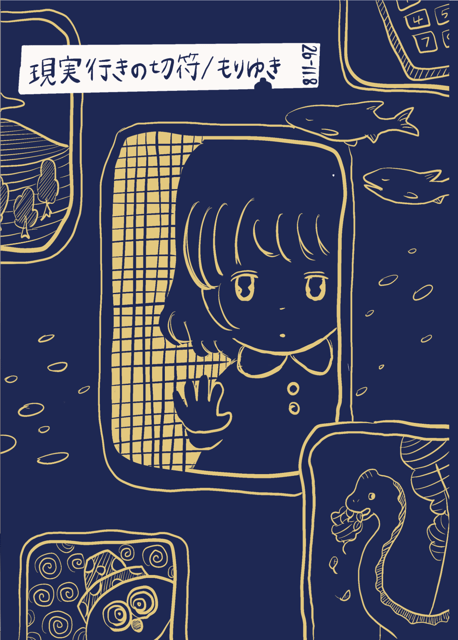
A zine featuring 50 tanka poems and 4 essays themed around “stations.”
I turned stations from my memories, as well as stations that do not exist, into tanka poems.
【Essays】
・A story about encountering kindness on the Keikyu Line
・A story about roasted corn tea that supported me during my days in sales
・My dream for the future: Cat Cat Palace
・Yuzu’s songs and the longing for Tokyo found within them
A5 size / 56 pages
You can read a preview in the note article below.
https://note.com/moriyukidaruma/n/ne9488d8e43c0
My life has always contained expression.
I'm 29 this year — calling it "life" may sound grandiose, but I've tried a fair number of things. That's partly because I'm the kind of person who has a low hurdle for new things and honestly follows the feeling of "I want to try."
Of course I've quit many things that didn't suit me, but some I was captivated by and became absorbed in because they were interesting. When I lined up the things I tried and enjoyed so far, I realized they were all connected by one word: "expression." If I define "expression" as putting my thoughts and feelings out into the world, then I've always been involved in expression.
Once I noticed it — like spotting a constellation among scattered stars — I couldn't think of it any other way. That's how I decided to make this ZINE.
—From the opening of the main text
This is an essay collecting the expressive activities the author has encountered and the people and words found there.
I hope it reaches people who look at the table of contents and think, "I did that too."
Contents
Introduction
On Creation: The Origin of Expression
About Diaries: A Journal Continued Since Age 13
About Piano I: The Piano, Me, and Liszt's "Sigh"
About Piano II: There Are No Bad Kids Who Make Music
About Wind Ensemble: Beings Who Can't Help but Express Themselves
About Dance: The Day the Reasons for Dancing Changed
About note: I'm Glad I Wrote
About Radio: Starting Again Online, Beginning Once More From "Nice to Meet You"
About Cameras: I Bought a 100,000-yen Camera. Even Night Traffic Lights Looked Beautiful
About ZINE I: I Want to Be a Vendor Too
About ZINE II: The Worries of Making a ZINE
About ZINE III: My First ZINE Fest
About ZINE IV: A ZINE's Goal Is to Become Someone's Start
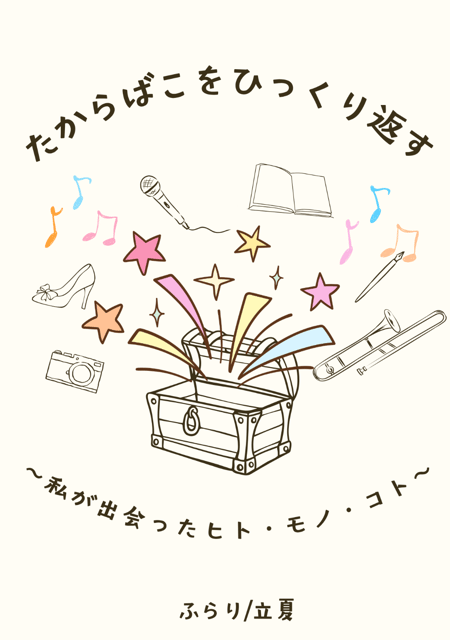
Afterword: About the Treasure Box
Overview
Title: Flipping Over the Treasure Box
Size/Pages: B6, 68 pages
Printer: Chokotto Seihon Kobo
This is a diary of thoughts from January–April 2025, the last three months of my 27th year. It collects moments when my emotions moved or when I thought deeply.
When I write in the diary, I focus on “what I am feeling, and what happens when I put it into words.” I write “what are you thinking now?” and record the answers in the diary. Those answers are the closest to my honest feelings, and often I discover, “oh, that’s what I thought.”
This book gathers the “things that are true” I found by facing myself and listening deep in my heart.
For details, see the note:
■https://note.com/frikka/n/n23dcce9e45f3
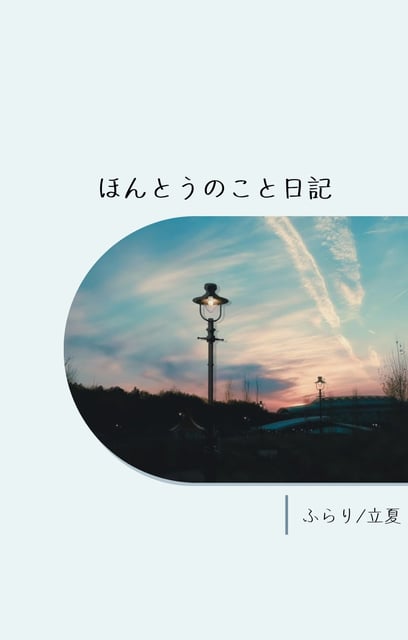
Title: Diary of What’s True
Size / Pages: B6, 40 pages
Price: ¥ 900 (plus ¥ 370 shipping)
Shipping method: Anshin BOOTH Pack
Printer: Chokotto Seihon Kobo
Cover: Mermaid Snow White
Furari / Ritsuka
https://note.com/frikka
It was a weekday with no events today, so I thought it would be a relaxed day,
but a regular customer, a tanka poet named Kei, came in. He bought a biography that his tanka teacher had recommended: "Taiyo no Usagi: Tracing the Sources of Yoko Nagai's Creativity" by Edo Yuki, published by Hon'ami Shoten. Yoko Nagai is from Seto City. She was a poet who died young and reportedly also worked at the Aichi Prefectural Library. A collection of her poems is now published by Tanka Kenkyusha. It had been a while since I'd seen Kei, so he stayed for tea and we chatted about BunFuri Tokyo.
Kei asked me if I knew the writer Akiko Itoyama. I said I only knew the name, but Kei told me that a classmate of his is friends with Itoyama and was the model for a character in her Akutagawa Prize–winning novel "Oki de Matsu." He showed me a recent photo and said, "He used to be a handsome track-and-field guy, but not anymore," which made me laugh. Itoyama apparently worked in Nagoya when she was a company employee, so since Nagoya figures in her work I checked our stock. There was a trace that one copy of "Tobou Kusotawake" had been in stock before, but we've never ordered "Oki de Matsu," so I ordered several books that seem to feature Nagoya. Thanks, Kei.
While we were having tea a young woman customer came in. She’d been browsing books, so I spoke to her. She’d come to Nagoya from Osaka on a trip and, surprisingly, had recently started touring sentō (public baths). I introduced her to the sentō ZINEs by Nando Nezumi and Rakugaki Usagi from Toyohashi, and she bought them. I also told her about the nearby Kintoki-yu, but her destination was actually Jizō-yu, which is about a ten-minute walk from here, so I gave her general directions. There are a lot of sentō fans.
In the evening a person I hadn’t seen for a long time stopped by. When I was director of Moriyama Library, a graduate student from the University of Tsukuba had come all the way from Tokyo to observe our Japanese extensive reading efforts. I had forgotten his face, but as we talked memories of that visit came back. He is continuing research on the initiatives at Moriyama Library. He bought my ZINE, "Eigakan no Kakera," and Professor Takeo Noguchi's "Library Services That Leave No One Behind." He told me he loves movies and had worked part-time at the Cine Switch in Ginza during high school and university. I asked if by any chance he knew actress Hairi Katagiri, and he said they were indeed friends — that surprised me. Speaking of Hairi Katagiri, I remembered that Nahoko Uehashi was a member of the same middle/high school drama club; I’d heard that from Uehashi when I was at Kaiseisha.
On Tuesday we processed two new arrivals from Tajimi-born poet Yoshihiro Ito and others, and I introduced them on X: "Palestine Poems: Running Freely in Gaza and the West Bank" and "Palestine Report (New Edition)."
11/12 (Thu)
A red dragonfly was wandering around the shop and fluttering and struggling by the window.
I touched a dragonfly with my hand for the first time in a while. It shivered and felt creepy.
Thanks to newspaper and TV media, the range of customers visiting the shop has broadened.
Today, too, someone in their sixties came right after we opened.
Two men in their fifties also joked, “Do you usually read books?” and ended up buying some.
A woman who saw our flyer came back and asked if we accept donations; she said she will donate some books later.
I've been hearing that some people are sorting out their books as part of end-of-life preparations.
This person also loves books and said they have many, so they will bring them in.
They seemed relieved to have found somewhere to take the books and left saying they felt reassured.
A newspaper reporter came and said they would run a piece at the beginning of the year.
At the good news I quietly shouted “Yes!” in my heart.
I'm preparing to buy used clothes tomorrow.
We will hold a used clothing POPUP at Hamachidori-gallery from the 21st to the 23rd.
Later, from 18:00, a reading group is scheduled, but there are currently no participants signed up.
We hold the reading group every week, but it's difficult to attract people. What should we do?
Maybe try allowing online participation.
Even if no one comes, the reading group will still be held.
I wonder who will join today. I'm excited and nervous.
 Zindies